Blower hero 3x2-Recovered.jpg
Bentley Blower Continuation

MULLINER

Bentley Blower Continuation

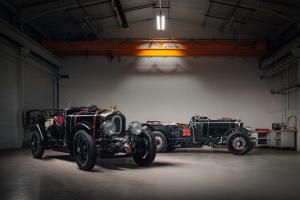
In 2019, the Mulliner team embarked on a remarkable project: to resurrect the supercharged Bentley 4½ Litre, more commonly known as the Blower. Just 12 cars were created, in what was to be the first car in Mulliner’s Continuation Series. These projects combine the latest digital technology with forensic examination of historic cars and components, to deliver the classic car equivalent of a moonshot – the resurrection of some of the most iconic cars in Bentley’s history.

MULLINER

A car born from conflict

Before exploring the process that led to the development of the Blower Continuation Series, it is worth considering the origin story of this legendary car. The Blower was born from conflict – or one fundamental disagreement, to be precise. W.O. Bentley, the founder of the company that bears his name, had always been convinced that the only credible way to build a faster car was to build a bigger engine. Yet in the 1920s, forcing more air into a smaller engine via what became known as supercharging became popular among some of Bentley’s rivals.
 

One of Bentley’s drivers, Sir Henry ‘Tim’ Birkin, was a fan of this new technology. But with W.O. opposed on principle, Birkin decided to address the issue himself. He turned to motorsport enthusiast Dorothy Paget for funding and together, they developed the supercharged Bentley 41⁄2 Litre that became known as the ‘Blower’. Although the Blower never won at Le Mans, it set several speed records and won the hearts of countless racing fans in the decades that followed. With very few original Blowers surviving intact into the 21st Century, Mulliner set out to bring history back to life. The Blower Continuation Series was born.

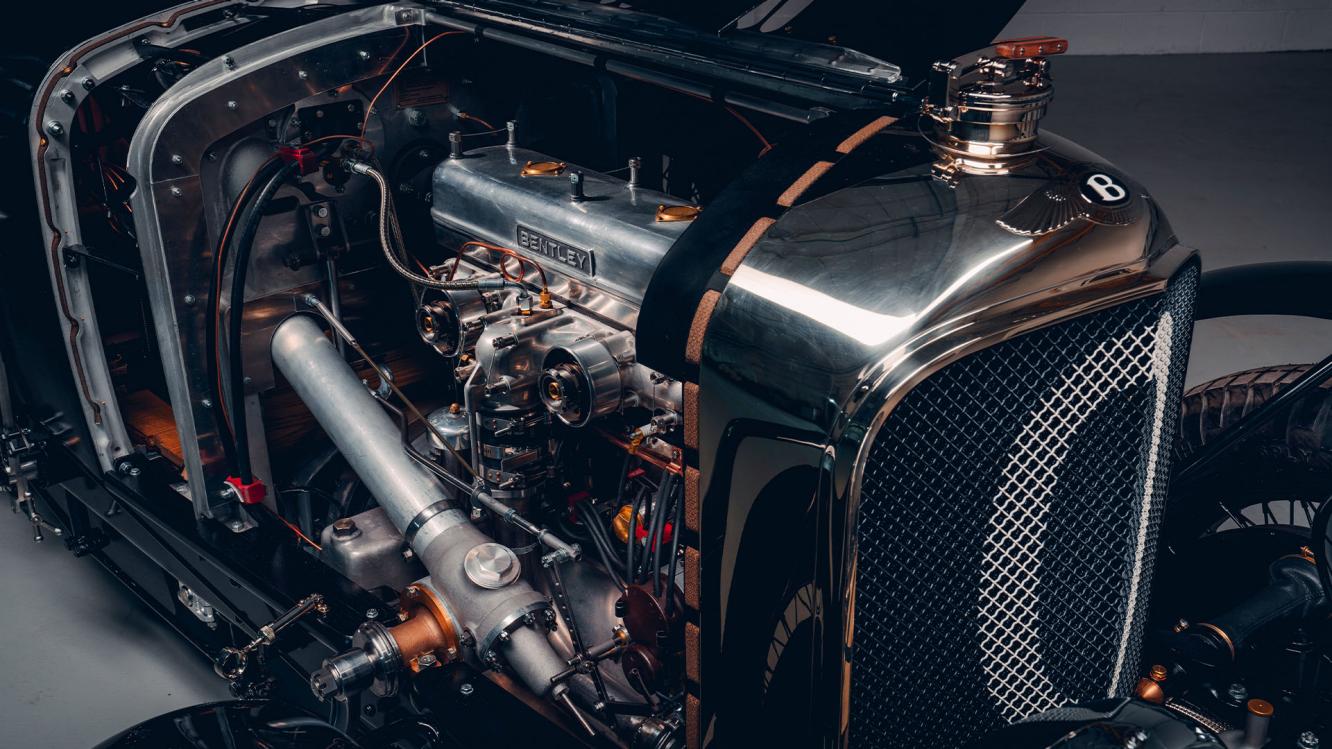
Bentley Blower Continuation engine bay
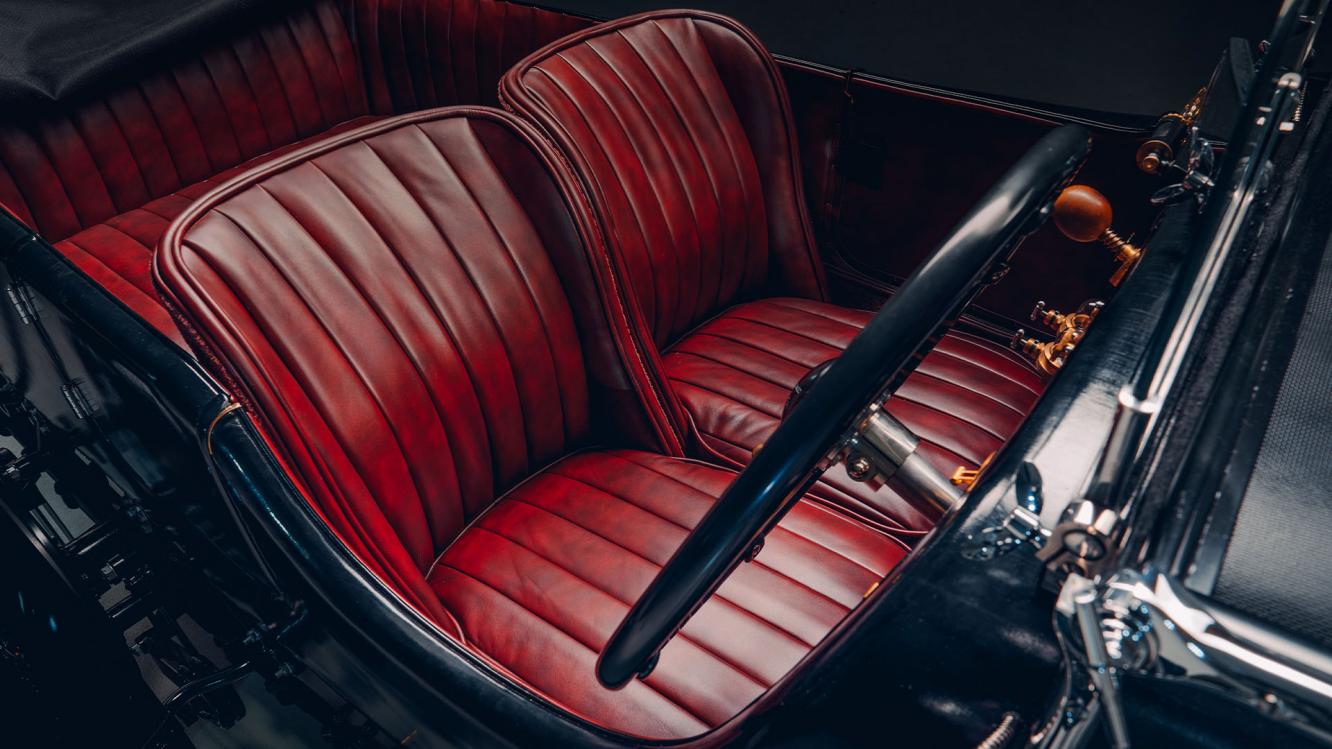
Bentley Blower Continuation interior
Black leather landscape.jpg

MULLINER

Bentley Blower Continuation

Back to the very beginning
Duplication down to the last detail
Testing out a time machine

To recreate the Blower, the Mulliner team took Bentley’s priceless original 1929 Team Blower and carefully disassembled it, part by part, so that every component could be catalogued and 3D-scanned, before the car was painstakingly rebuilt and restored to working order. With a complete digital mode of the original car duly created, the files were then used as the blueprint for the first new Bentley Blowers to be built in almost a century.
 

But generating the blueprint was only the beginning. Parts for a car built in the “roaring rwenties” cannot just be ordered online, so the team had to make each one from scratch. This meant finding original 1920s moulds and tooling jigs, before the first build even began. Using traditional hand tools, they began assembling a prototype of the first new Bentley Blower to be built in more than 90 years. And 40,000 man-hours later, following the manufacture of 1,846 unique new components, the prototype was complete. 

Like every Blower Continuation Series car, the prototype, known as Car Zero, is built on a pressed steel frame, just like the originals. It features half-elliptic leaf-spring suspension, plus perfect copies of the original Bentley & Draper dampers and Bentley-Perrot drum brakes – all crafted by hand in the Mulliner workshop and all identical to the components used in 1929. Beneath the bonnet lies the same 4,398 cc, four-cylinder, 16-valve engine, with the same aluminium crankcase, cast iron cylinder liners and non-detachable cast-iron cylinder heads.
 

Finally, there is the supercharger that gave the car its name: an exact replica of the Amherst Villiers Mk IV unit, which helps the engine generate 240 bhp at 4,200 rpm. At the time it was both controversial and phenomenally powerful. Today it stands as a unique demonstration of what Mulliner coachbuilding and engineering can achieve.


With Car Zero finished in gloss black, with an interior trimmed in Oxblood Bridge of Weir leather, this prototype then embarked on a gruelling test programme. It covered 35,000km in Europe and the US, of which at least 8,000km were on test facilities and racetracks, to ensure it performed reliably, safely and, above all, to the performance standards set by the original Blowers, back in the Twenties and Thirties.
 

Only when Car Zero had passed every test could it be considered a true reincarnation of the legendary Number Two Team Blower. And only then could creation of the 12 customer cars begin. 
 

When it came to the exterior of the car, the frame was clad in around 25 meters of Rexine, a highly specialised period-correct fabric, to create the Speed Six’s Weymann-style open tourer bodywork. At every stage, the car was crafted using authentic techniques and materials.

MULLINER

Every car is personal

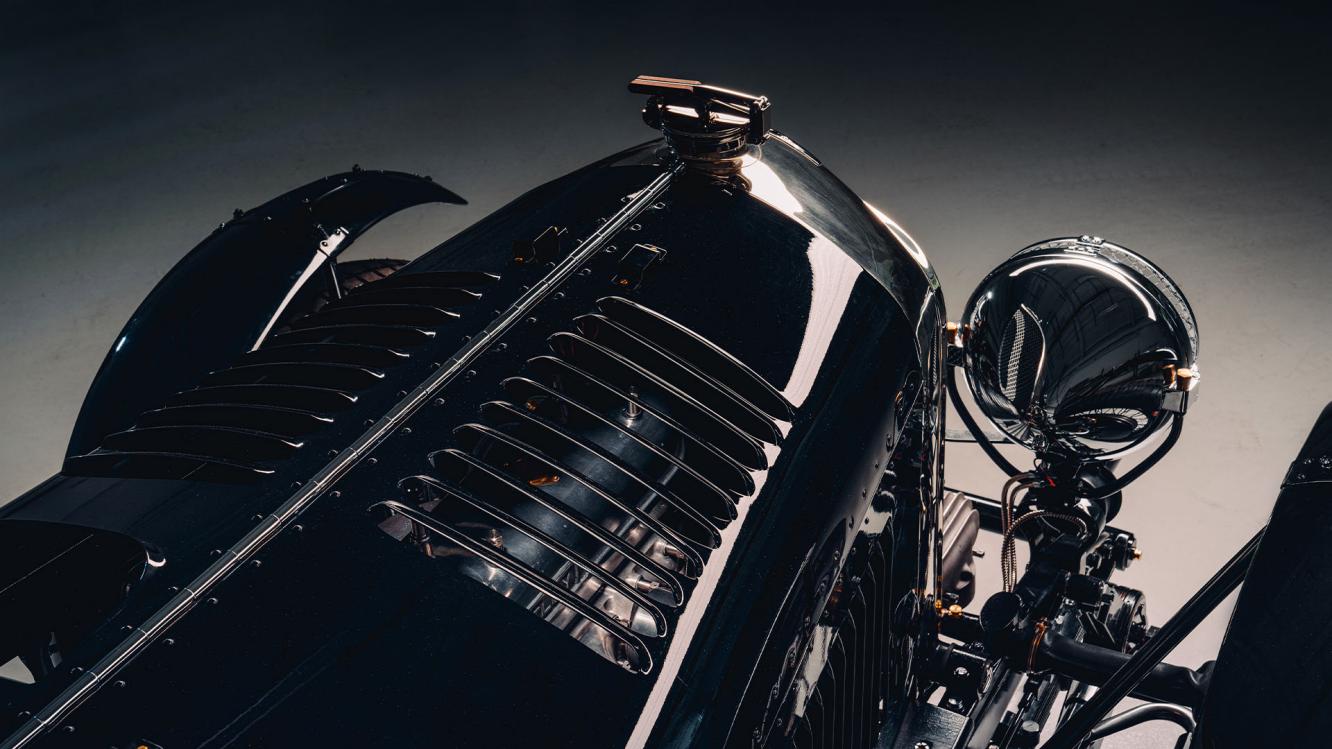
Only a dozen Continuation Series Blowers will ever exist – and each one is truly unique. That is because even on a historical recreation project like this, there will always be options for personalisation. Take the exterior paintwork, for example. A range of period colours was made available, for the simple reason that the original Blowers were painted in a variety of colours, with some of them being repainted on more than one occasion. The buckled leather bonnet strapping used to secure the hinged panels that conceal the engine were supplied in a tan hide as standard, though like the interior leather, this could be swapped for a different colour, according to the customer’s preference.
 

The design used for all five wheels (the four fitted to the axles plus the spare mounted on the side) was the open, many-spoked structure that was popular throughout the early 20th Century. On the original cars, these wheels could be painted or finished in chrome, so the same choice was made available to all customers.  Every Blower Continuation Series car however is truly be-spoke – which means that while they were all built from the same blueprint, every car is made unique to the clients’ tastes. 

Vehicle not homologated for road use. Car built in accordance with FIA Appendix K.